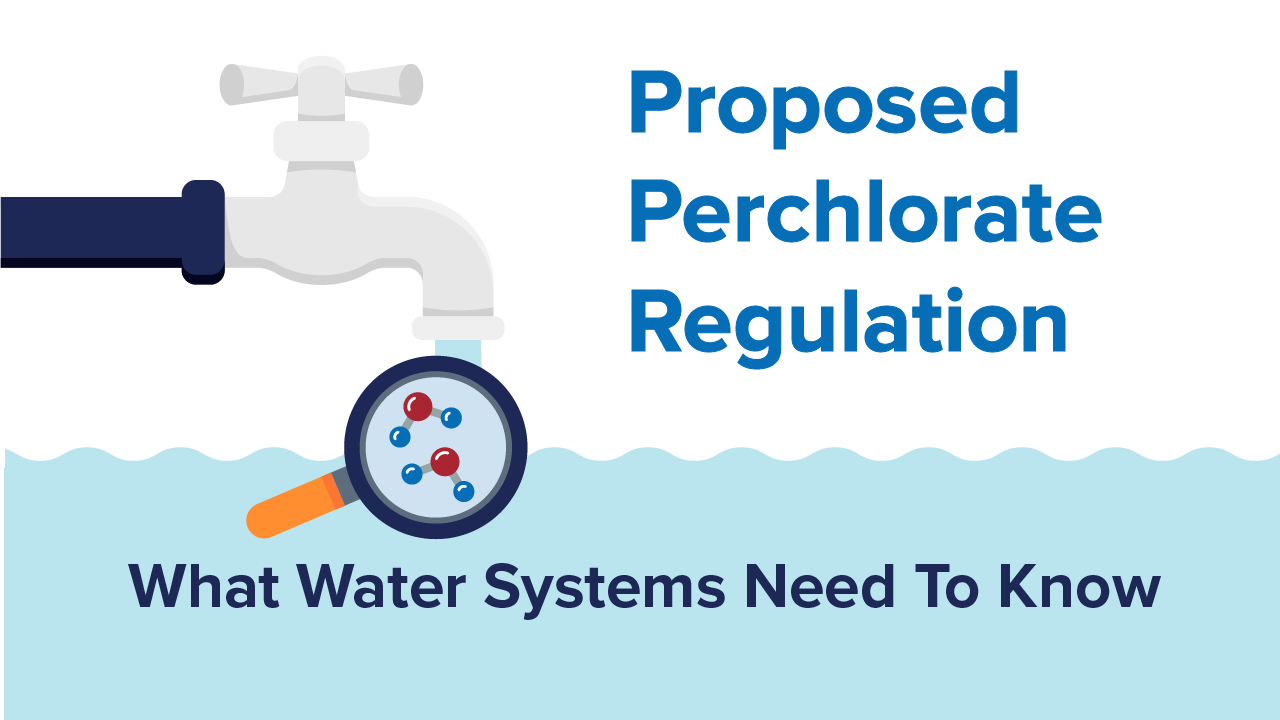
The U.S. Environmental Protection Agency (USEPA) is proposing a National Primary Drinking Water Regulation (NPDWR) and a health‑based Maximum Contaminant Level Goal (MCLG) for perchlorate. This regulatory action comes in response to the D.C. Circuit Court ruling in NRDC v. Regan, which found if USEPA issues a determination to regulate a contaminant, it must proceed with regulation even if later scientific evidence shows the contaminant no longer meets statutory criteria.
USEPA proposes an MCLG of 20 µg/L and is considering enforceable Maximum Contaminant Levels (MCLs) of 20, 40, or 80 µg/L, despite its conclusion that “the benefits of this regulation would not justify the costs.”
Perchlorate is a chemical used in rocket propellants, fireworks, and airbags. It can contaminate drinking water through industrial activity or degradation of hypochlorite solutions. Human exposure primarily occurs through food and water. Perchlorate disrupts thyroid function, which can impair metabolism and fetal brain development.
Assessments have shown that perchlorate appears in only a small percentage of public water systems and generally at low levels. Earlier regulatory steps were based on limited data and non–peer‑reviewed models. Subsequent scientific review, including recommendations from the Science Advisory Board, led USEPA to develop a more rigorous model. Within the past seven years, updated data indicated that perchlorate did not occur at levels of public health concern nationwide, prompting the USEPA to withdraw its determination to regulate, an action later vacated by the D.C. Circuit.
The proposed rule includes monitoring, reporting, and treatment requirements, though USEPA emphasizes that most of the roughly 66,000 affected water systems are unlikely to have perchlorate at concerning levels. However, systems that exceed the MCL could use treatment technologies such as ion exchange or reverse osmosis and would need to issue Tier 1 public notifications due to risks to sensitive populations.
Now USEPA is seeking public comments on the proposed MCLG, MCL options, and monitoring requirements. Comments can be submitted through March 9, 2026 on the Federal Register.