
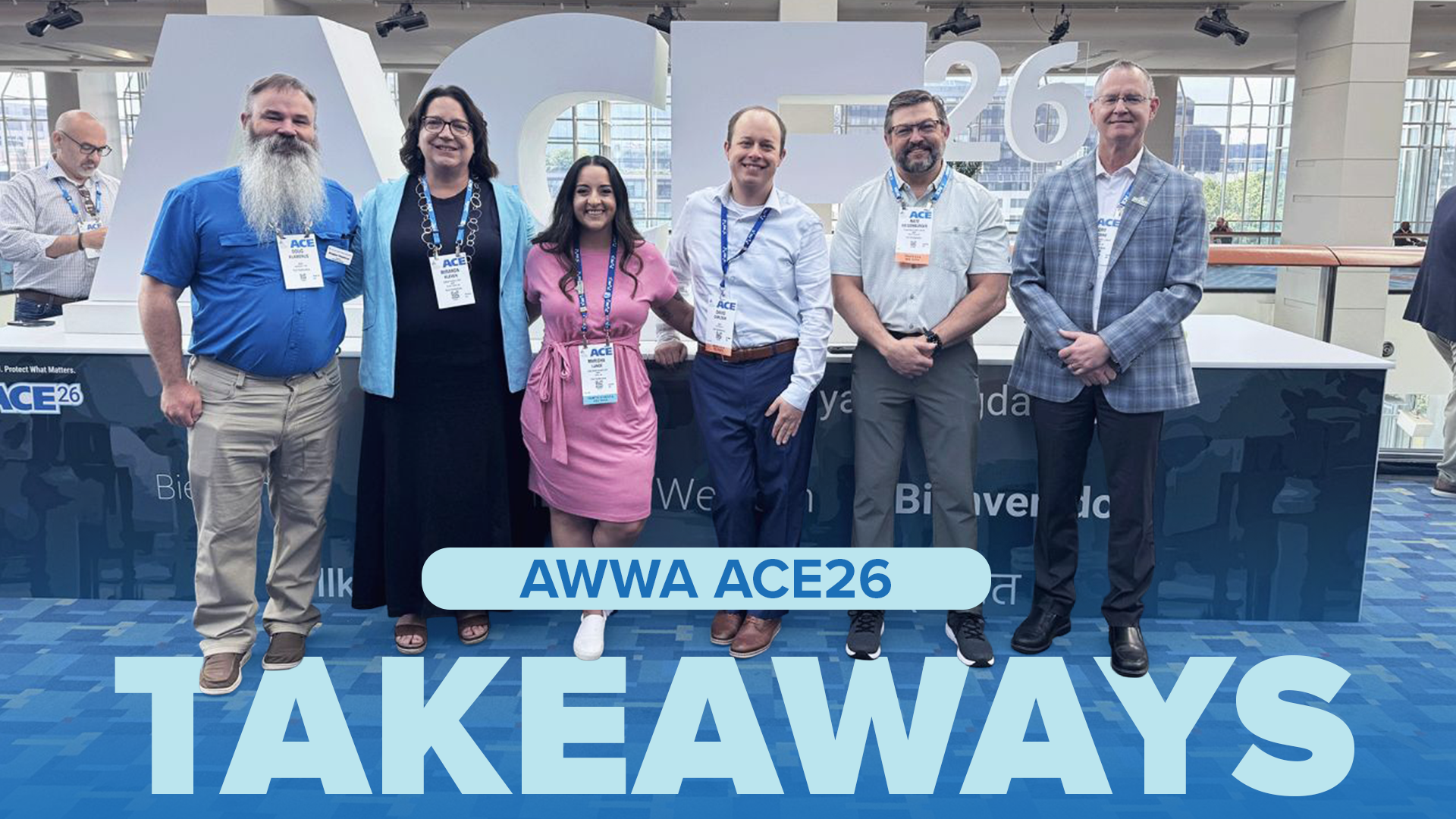
The American Water Works Association (AWWA) Annual Conference and Exposition (ACE26) was held from June 21-24, 2026, in Washington, DC. The theme of ACE26 was Water Heroes, which seemed altogether appropriate as the event took place in the midst of preparations leading up the 250th birthday of the United States of America. Upon reflection, I offer the following takeaways about artificial intelligence (AI), funding programs, and regionalization.

From the Opening General Session to technical sessions, AI was a recurring topic of discussion, particularly with respect to knowledge management and appropriate use of the technology. Those who leverage AI constructively will reap the benefits, especially when considering the prevalent use by the upcoming generations of leadership. Additionally, discussions revolved around improving strategies to support data center initiatives.
One underlying point to all these discussions is that AI will have an impact on our labor force and economy; however, the empathy and logic provided by human intelligence and the ability to make judgement calls in the real world when data is not sufficient cannot be replicated.

The outcome of the appropriations process for the State Revolving Fund and other sources of funding for water infrastructure is difficult to predict. The national debt and global conflicts represent significant headwinds to maintain, much less, increase program funding to meet the growing need for infrastructure renewal, regulatory compliance, and overall system resiliency objectives.
While letter writing efforts and phone calls can make a difference, ACE26 presenters recommend inviting members of your respective congressional delegation to tour critical assets within your water utility. Seeing a challenge firsthand or having the opportunity to experience the outcome of investments in infrastructure is often overlooked as a meaningful strategy to engage with members of Congress and demonstrate the success of Federal funding programs.
The challenges posed against water systems will require utility leaders, engineers, and planners to think differently about potential solutions, and in many instances, (re)consider partnerships with neighboring communities despite the pride generated by forging ahead with an independent mindset.
A common misconception of regionalization is loss of identity or control over a water source or critical asset; however, such concerns can often be addressed by a properly negotiated agreement that protects the interests of participating entities and provides a suitable method of governance based on the consensus of stakeholders. Most might view regionalization from the perspective of combining infrastructure components to provide consecutive water service. While that is a common version, other concepts include sharing workforce, maintenance equipment, and emergency interconnects, just to name a few.
There is strength in numbers. For communities that are experiencing slow to zero growth or population decline, gaining better control over costs via regional partnerships should become a priority over the preservation of independence, which may result in the ultimate demise of identity altogether.
Your Takeaways
Do you have highlights from ACE26 that I didn’t mention? Drop me a line at Nate.Weisenburger@AE2S.com if you have questions or comments about my top three takeaways. And yes, for those who are wondering, I did check out the reflecting pool from the steps of the Lincoln Memorial.