
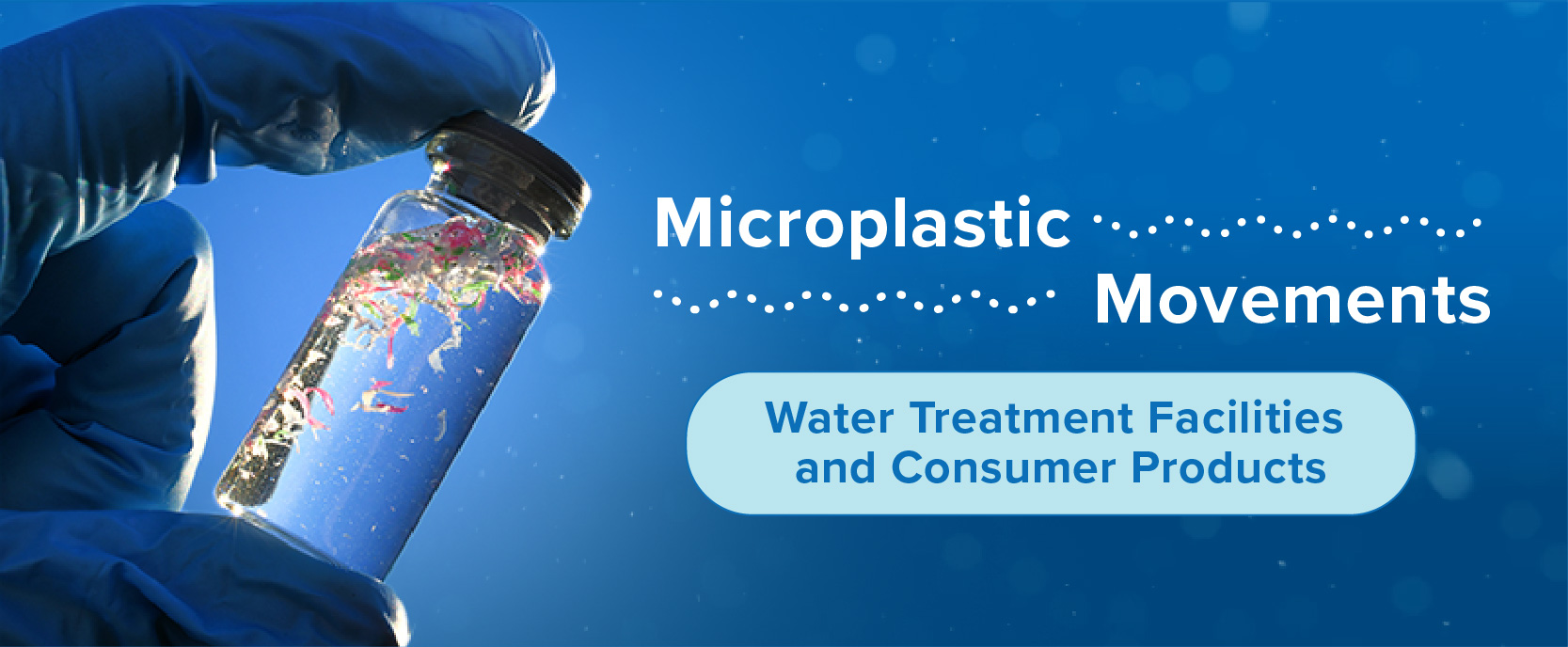
Microplastics (MPs) are a growing concern in the water industry. The U.S. Environmental Protection Agency (USEPA) continues to identify contaminants of concern, which serve as the source of candidates for the lists included in the Unregulated Contaminant Monitoring Rule (UCMR) framework. A few emerging contaminants have been identified for potential future regulation, with significant concerns expressed for MPs, which are particles less than 5 millimeters and are often microscopic.
Ubiquity of Microplastics
MPs are an unfortunate result of modern convenience. The National Oceanographic and Atmospheric Administration (NOAA) acknowledges that MPs originate from countless sources, where the largest umbrella category is likely degraded larger plastic debris, from litter on the side of the highway to plastics in the ocean to landfills leaching into the ground.
Other sources include synthetic textiles and clothing, where manufacturing generates microplastics and day-to-day washing strips plastic fibers into the water. Car tires are another prevalent source, as they are subject to ultraviolet (UV) exposure and abrasion when driving, releasing MPs onto roadways and the environment. Plastic packaging can shed particles when shuffled around, especially if the environment is warmer – like in a shipping truck.
How MPs Enter Source Waters
MPs enter a raw water source, like surface water reservoirs and groundwater aquifers, in three major pathways:
- Treated wastewater discharges
- Atmospheric deposition
- Surface runoff
Once in a drinking water source, water treatment facilities (WTF) are effective at removing MPs greater than 500 micrometers. However, the drinking water treatment process can also cause MPs to fragment and break down to particles under 500 micrometers or into even smaller nanoplastics (NPs). The generally accepted rule of thumb for classification is that NPs measure <1 micrometer, while MPs range between 1 to 5 micrometers.
Treatment Technologies
Here are a few of the many water treatment technologies for removing MPs:
- Coagulation / Sedimentation: Many treatment facilities already have coagulation and sedimentation stages in the treatment process that contribute to partial removal.
- Sand Filtration: More effective at removing larger particles and can be targeted towards smaller particles when enhanced with biochar.
- Biofilms and Porous Media: Porous media can accumulate MPs effectively with the help of biofilms.
- Granular Activated Carbon (GAC): Can be combined with ozonation to achieve up to 83% removal of MPs[1].
Many of these technologies have been around for a long time, and there are emerging technologies that hold a lot of promise. However, it will likely be some time before MP-specific process units are widely implemented into municipal treatment systems.
Treatment Challenges
While water treatment can generally remove some MPs, it can also cause existing MPs to break down and multiply via fragmentation and abrasion throughout the treatment process, as well as experience degradation under UV disinfection. Some of the equipment in treatment processes is plastic-based and can release microplastics when under pressure or through agitation. Conveyance systems made of PVC, HDPE, or polypropylene (PP) pipe may also contribute to MPs released into treated drinking water, though the conveyance piping has greater corrosion and abrasion resistance.
This information could imply municipal drinking water is more concentrated with MPs. However, tap water has been found to have generally lower MP concentrations than bottled water and other packaged beverages. Of the limited data from studies comparing MP content in bottled versus tap water, it has generally been found that bottled water has comparable MP content as tap water at best, and significantly more MPs per liter than tap water at worst.
Much of the variance between these studies can be attributed to non-standardized microplastic testing methods with varying detection limits. Tap water was found to contain under 500 MPs per liter in all but one study evaluated by Microplastic Pollution in Drinking Water[2].
On the other hand, bottled water sampling was more inconsistent, with results ranging from low levels of MPs and varying to levels in the 1,000 to 10,000 MPs per liter range, with one study finding that bottled water contained an average of 54.2 million MPs per liter.
Container Impacts
Many studies have evaluated polyethylene terephthalate (PET) plastic bottles, glass bottles, aluminum cans, bottle caps, and many bottling methods for microplastics content. The effects related to the type of beverage, preparation and bottling methods, and materials are not yet well understood, due to limited data and non-standardized methods. However, there are a few associative relationships emerging – carbonated beverages can increase the pressure and MP shedding in the container; and rigid plastics have been observed to release larger particles, while moldable plastics are associated with smaller particles[3].
In a few studies, glass-bottled and aluminum-canned beverages were found to contain higher concentrations of MPs than single-use PET bottles, contradicting many theories. While there are many different aspects that can affect the MP content of an individual beverage, they are far from being fully understood. The USEPA has emphasized the importance of standardizing “collection, extraction, quantification, and identification methods for MPs and NPs to improve reliability, consistency, and comparability across studies”[4].
Limiting Exposure
Like water treatment methods and the prevalence of MPs in the environment, we are still discovering the impacts of MPs on the human body, especially long-term effects. The general theme of human health effects consists of inflammation, tissue damage, and potential chronic effects including carcinogenicity and endocrine disruption. While we understand a limited scope of MP effects on human health, there is a much larger scope of what we are not aware of yet. Until definitive data emerges, consumers can take steps towards reducing their exposure to microplastics.
Short-term, consumers can reduce exposure and MP risk at home and in the grocery store by purchasing fresh fruits and vegetables, storing food in glass jars, and avoiding heating food in plastic containers. Residential filtration units and boiling water before consumption have been found to significantly reduce the MP content of tap water. As for canned and bottled beverages, third-party testing is potentially available for select products, although there are limited actions to reduce MP exposure when purchasing them. Opting for reusable or biodegradable materials like water bottles or food packaging as well as natural textiles is a good place to start.
[1] Cai, T.; Tang, Z.; Gu, T.; Tong, K.; Wang, X.; Chen, H.; Zhou, X.; Long, Z.; Hao, C.; Chen, C.; et al. Microplastics in Drinking Water: A Review of Sources, Removal, Detection, Occurrence, and Potential Risks. Toxics 2025, 13, 782. https://doi.org/10.3390/toxics13090782
[2] Kirstein, I.; Gomeiro, A.; Vollertsen, J. Microplastic Pollution in Drinking Water. Toxicology 2021, 28, 70-75. Microplastic pollution in drinking water – ScienceDirect
[3] Rahman, S.; Saha, W.; Maysha, T.; Sarker, P.; Datta, T.; Rahman, S.; Chacrabati, R. Prevalence and Health Risks of Microplastics in Bottled Water and Beverages: A Food Safety Concern. Journal of Hazardous Materials: Plastics, 2026, 2. Prevalence and health risks of microplastics in bottled water and beverages: A food safety concern – ScienceDirect
[4] Microplastics Research. EPA, 19 March 2026. Microplastics Research | US EPA