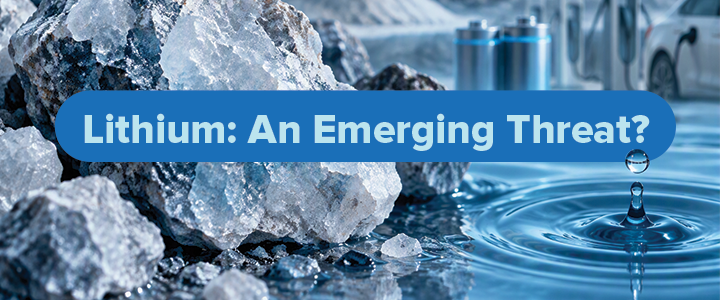
Most of us use technology that contains lithium every day. Lithium is a chemical element of growing concern for water quality managers and public health officials as it finds its way into the environment via battery disposal, mining, and pharmaceuticals. Though the soft, silvery-white alkali metal occurs naturally, lithium is increasingly utilized in manmade products such as electric vehicles, batteries, and consumer technology. Lithium’s environmental footprint and its growing presence in drinking water sources is becoming a hot topic in the water industry.
How it Enters Water
Lithium is released naturally through the weathering of rocks and various clays, or through volcanic and geothermal activity. High concentrations are particularly common in closed-basin brine lakes found in arid regions such as the “lithium triangle” of Argentina, Bolivia, and Chile, as well as certain geothermal and oil field waters. In the United States, lithium is commonly found in Nevada, North Carolina, California, and Utah.
Humans contribute lithium to the environment through the manufacturing processes of ceramics, glass, and steel, which discharge lithium into water and wastewater streams. Pharmaceutical residues from lithium-containing medicines for the treatment of bipolar disorder and depression can enter municipal systems through wastewater effluent. The improper disposal of lithium-ion batteries, landfill leachate, and accidental fires from battery storage contribute to the presence of lithium in surface and groundwater.
Prevalence of Lithium Near You
According to results from samples taken under the Unregulated Contaminant Monitoring Rule (UCMR5) as required by the U.S. Environmental Protection Agency’s (USEPA), approximately 26.6% of water systems sampled across the country contained lithium concentrations above 10 micrograms per liter (μg/L), with higher rates in systems drawing from groundwater rather than surface water. Median lithium concentrations in groundwater are roughly 15 μg/L, but values above 900 μg/L have been detected in localized areas. Surface water systems average 8.7 µg/L, with 263 µg/L being the maximum detected. Both large and small systems, especially those in arid regions or near lithium-rich geological formations, are particularly vulnerable.
According to results from the UCMR5, lithium has been detected in every State where AE2S has a presence. The State with the lowest maximum detected lithium concentration is shared between Florida and Wisconsin, with one system detecting 59 μg/L in each state. The State with the highest maximum detected lithium concentration is Utah with one system detecting 960 μg/L. If you would like to look up lithium results in other states, visit the USEPA UCMR5 data finder.
The following table summarizes the most recent lithium data from the UCMR5 database:
| CO | FL | ID | IA | MN | MT | ND | SD | UT | WI | |
| Min | <MRL* | <MRL | <MRL | <MRL | <MRL | <MRL | <MRL | <MRL | <MRL | <MRL |
| Max | 309 | 59 | 150 | 480 | 99.6 | 85 | 99.5 | 440 | 960 | 59 |
| Average# | 14 | 5.2 | 20 | 37 | 10 | 17 | 41 | 44 | 16 | 5.3 |
MRL = Minimum Reporting Level = 9 µg/L
All Results in µg/L
Health Effects & Regulatory Guidelines
The presence of lithium in drinking water raises critical questions about human health and regulation. At pharmacological doses, lithium is effective for stabilizing mood disorders, but side effects can include chronic kidney disease, diabetes, hypothyroidism, neurological effects, and cardiac disturbances. Adverse outcomes are dose-related and become more severe with chronic or high rates of exposure.
Health data from clinical settings has been utilized to inform risk benchmarks for environmental exposures. The USEPA established a provisional reference dose (p-RfD) of 2 μg/kg/day, based on the lowest dose at which adverse effects were observed in clinical patients. The USEPA set a non-regulatory Health Reference Level (HRL) of 10 μg/L for drinking water, assuming average adult water consumption and that 20% of total lithium intake comes from drinking water. Other agencies, such as the US Geological Survey has published a screening level of 10 μg/L, but no enforceable Federal or State maximum contaminant levels (MCL) currently exist.
The broader health implications of low-level, chronic lithium exposure from drinking water remain unclear. While some studies suggest communities with higher lithium levels in drinking water may have reduced suicide rates or lower death rates, the findings are inconsistent, and larger studies have not consistently confirmed the associations. Adverse effects of lithium, especially on sensitive groups such as pregnant women, infants, and those with kidney or thyroid disorders, cannot be ruled out at the low exposure levels typically found in water, which is why regulators must strike a balance between precaution, benefit, and risk as more data are collected.
Monitoring Challenges
In a lab, lithium is a challenging contaminant to monitor and control. Since lithium is present in water as a highly soluble monovalent cation (Li+), with a small ionic radius and high mobility, it is not effectively removed by conventional drinking water treatment processes such as coagulation, lime softening, media filtration, or oxidation.
For regulatory monitoring, the USEPA requires analysis by sensitive inductively coupled plasma–atomic emission spectroscopy (ICP-AES), which reliably detects lithium down to the low microgram per liter range (method reporting limits near 4–9 μg/L). Other analytical methods such as flame atomic absorption (FAA), ICP-mass spectrometry (ICP-MS), and ion chromatography are available, but the methods are less commonly used for routine monitoring. Quality assurance is very important with lithium because the target concentrations are close to or below typical method detection limits for older or less sensitive techniques.
Drinking Water Treatment Technologies
There are few practical, scalable, and cost-effective technologies that currently exist for removing lithium from municipal drinking water supplies. As a result, water utilities face a difficult landscape if future regulations require widespread lithium removal from finished water.
Reverse Osmosis
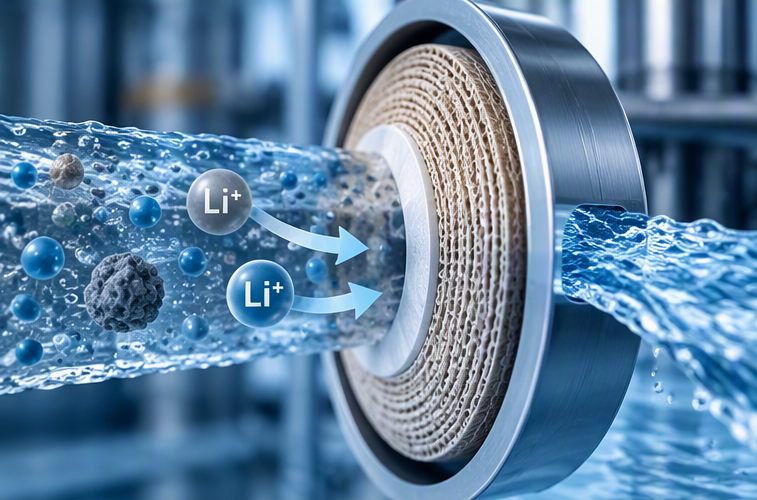
Reverse osmosis (RO) is the only mature and widely deployed technology that can reliably achieve high removal (typically >90%) of lithium across a range of water qualities. RO works by rejecting the small monovalent Li+ ion, but it also removes essential minerals, generates a large volume of brine concentrate that must be managed, and carries high capital and operational costs. For many utilities, especially small or rural systems, RO may not be a feasible or sustainable solution.
Cation Exchange Resins
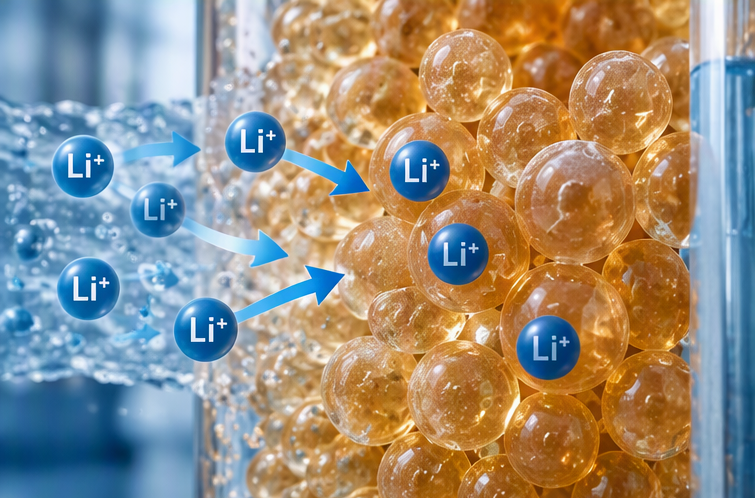
Cation exchange (CIX) resins, widely used for water softening, can remove lithium to some extent, but they lack high selectivity for lithium over much more abundant ions like sodium, calcium, and magnesium. As a result, resin capacity for lithium is rapidly exhausted, and frequent regeneration produces additional waste streams.
Lithium Ion-Sieve
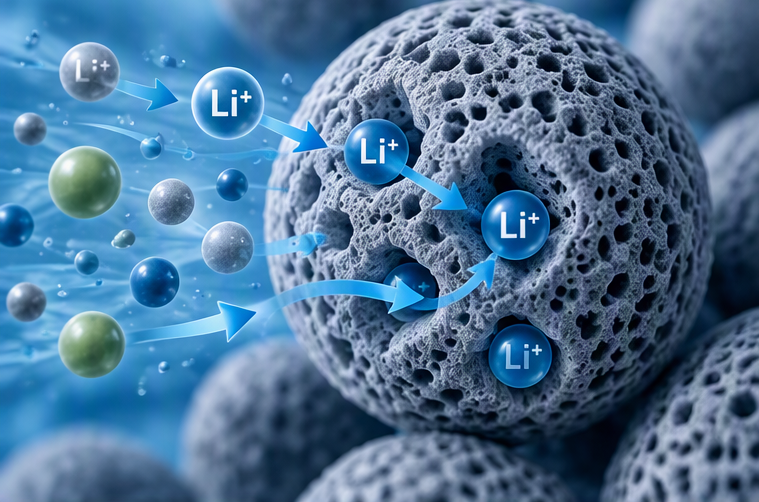
Novel lithium ion-sieve (LIS) technologies show promise in lab studies and for lithium resource extraction from brine, but they are not yet available in granular or robust forms for municipal water treatment. LIS technologies employ engineered manganese oxide or titanium phosphate materials with pore sizes tailored for lithium. These materials suffer from stability challenges under acidic regeneration conditions and often lose significant capacity or structure over repeated cycles.
Nanofiltration, Electrodialysis & Membrane Combinations
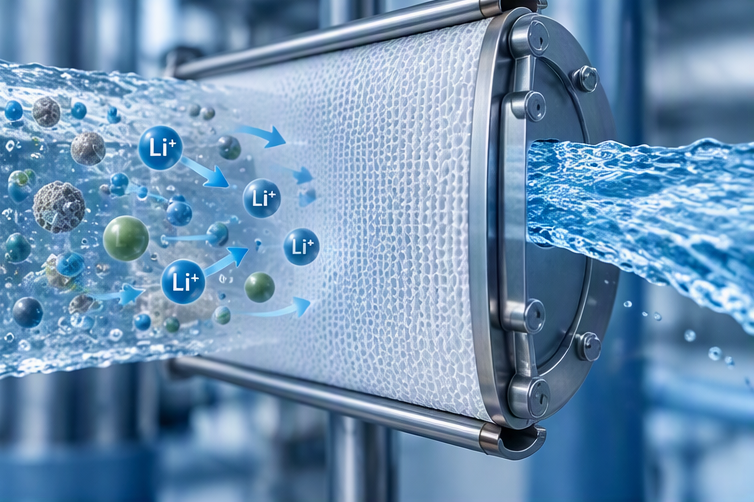
Other advanced options like nanofiltration, electrodialysis, and membrane combinations are currently at experimental or pilot scale. They typically also require significant brine management and energy input. Precipitation of lithium as insoluble salts is not viable at drinking water concentrations due to the high solubility of lithium carbonate, phosphate, and fluoride under typical water chemistry conditions.
What is Next?
Given the prevalence of lithium in drinking water and treatment limitations, if USEPA established an MCL at or near 10 to 15 μg/L, it would have far-reaching implications. Thousands of water systems, particularly those that rely on groundwater or are located in the western United States, would need to assess, upgrade, or implement costly new treatment processes.
The issues of affordability, brine disposal, energy use, and remineralization of ultra pure water would need to be addressed. For individual consumers, point-of-use RO units installed under sinks may offer a practical short-term solution, but they are not a substitute for comprehensive system-wide solutions.
The most effective and sustainable strategy is to minimize lithium contamination at the source. This includes improved management and recycling of lithium-ion batteries, responsible handling and disposal of industrial wastes, upgrading of pharmaceutical take-back programs, and careful siting and monitoring of landfills and recycling centers.
Additional research is needed to better quantify the true exposure risks of lithium at environmentally relevant concentrations, especially for sensitive subpopulations. Long-term, high-quality studies, improved analytical methods for routine monitoring, and rigorous field evaluations of advanced treatment technologies are needed. Ongoing occurrence monitoring, advances in water treatment technology, and more robust health effects research will be key to resolving uncertainties and informing future regulations.