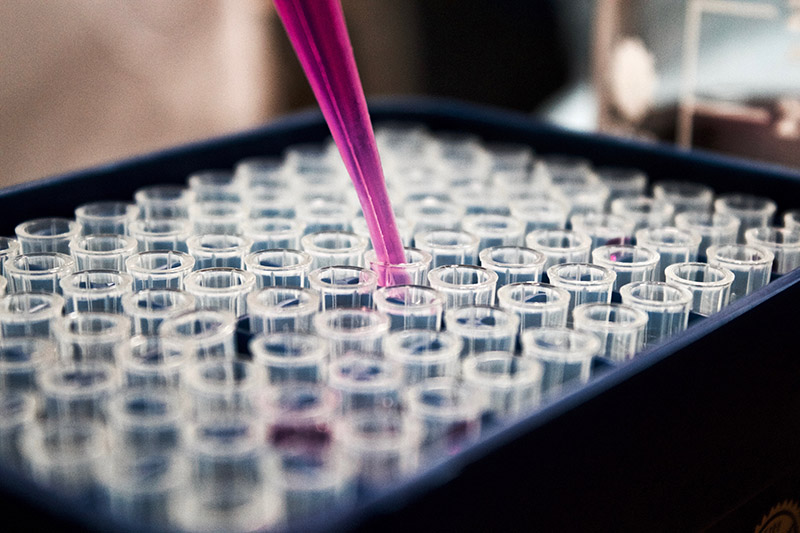
The U.S. Environmental Protection Agency (USEPA) has issued Interim Recommendations for Addressing Groundwater Contaminated with Perfluorooctanoic Acid (PFOA) and Perfluorooctanesulfonate (PFOS) under federal cleanup programs, a priority action under the USEPA’s action plan for per- and polyfluoroalkyl substances (PFAS). “The interim recommendations will provide clear and consistent guidance for federal cleanup programs and will help Read More

New PFAS Testing Method Announced
The U.S. Environmental Protection Agency (USEPA) recently announced a new method for testing per- and polyfluoroalkyl substances (PFAS) in drinking water. The new validated test method complements other actions the USEPA is taking under the PFAS Action Plan to help communities address PFAS nationwide. PFAS are a large group of man-made chemicals used in consumer products Read More
USEPA Proposes Regulatory Determination for PFOS & PFOA
The U.S. Environmental Protection Agency (USEPA) has proposed regulatory determination for perfluorooctanesulfonic acid (PFOS) and perfluorooctanoic acid (PFOA) in drinking water to the Office of Management and Budget for interagency review. It is part of USEPA’s efforts under the PFAS Action Plan to help communities address per- and polyfluoroalkyl substances (PFAS) nationwide. The USEPA says the proposal Read More
Draft MS4 General Permit Public Comments Open Until Jan. 11
The Draft Municipal Separate Storm Sewer Systems General Permit is available for public comment until January 11, 2020 on the Minnesota Pollution Control Agency’s (MPCA) public notices webpage. The MS4 General Permit will provide coverage for approximately 249 entities, including cities, townships, counties, watershed districts, colleges and universities, correctional facilities, the department of transportation, and a Read More
USEPA Continues Progress Under PFAS Action Plan
As part of the U.S. Environmental Protection Agency’s (USEPA) extensive efforts to help communities address per- and polyfluoroalkyl substances (PFAS) under the PFAS Action Plan, the USEPA released the Systematic Review Protocol for five PFAS toxicity assessments for a 45-day public comment period. The assessments are being developed under the Integrated Risk Information System (IRIS) Read More
USEPA Updates UCMR 4 List
The United States Environmental Protection Agency (USEPA) recently updated the results of the Fourth Unregulated Contaminant Monitoring Rule (UCMR 4), a rule that requires public water systems to monitor drinking water for 30 contaminants. The UCMR 4 applies to public water systems that serve more than 10,000 people, as well as 1,600 public water systems Read More