
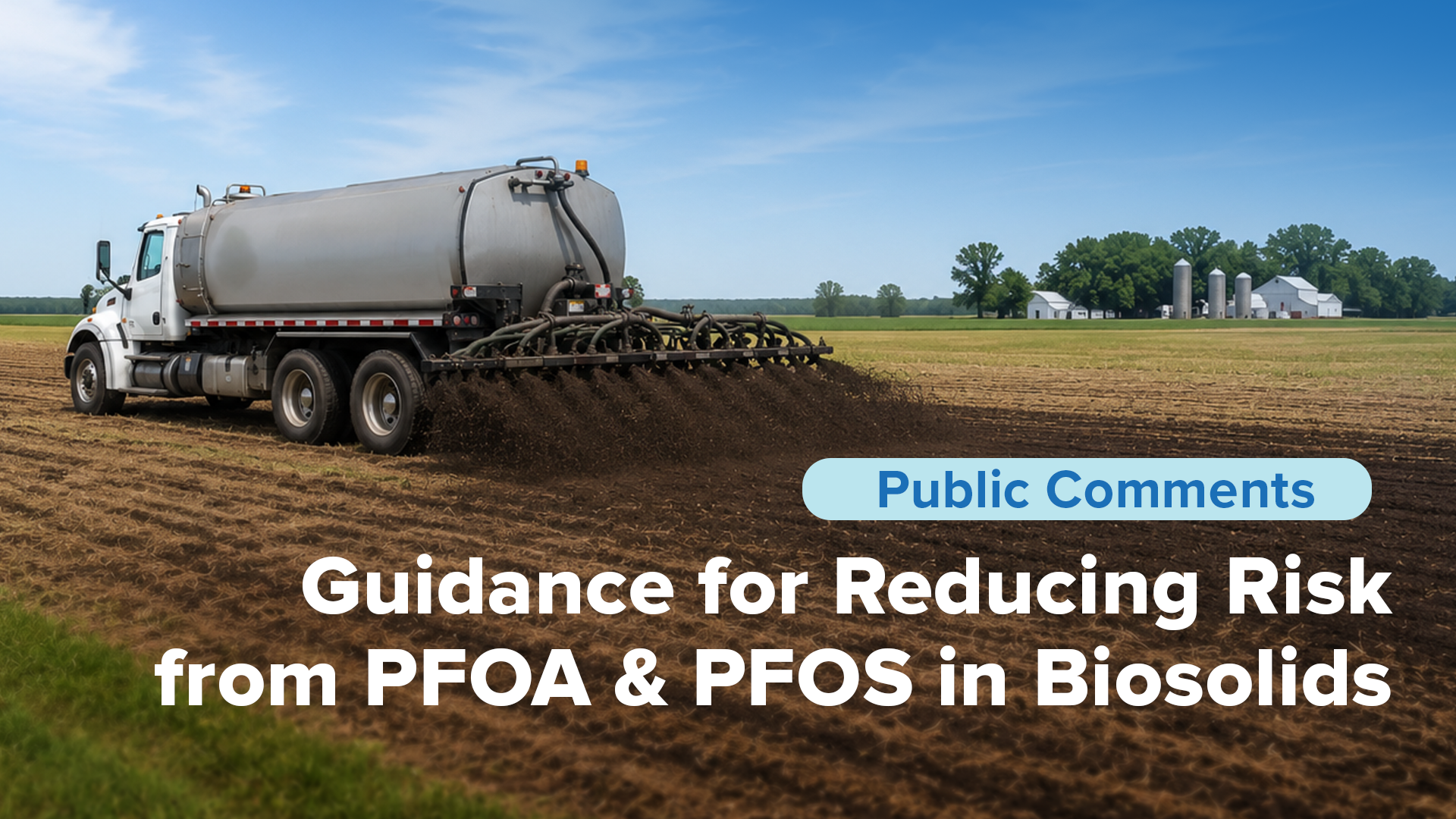
New draft guidance from the U.S. Environmental Protection Agency (USEPA) aims to help wastewater utilities, landowners, and the public reduce risk from perfluorooctanoic acid (PFOA) and perfluorooctane sulfonic acid (PFOS) in biosolids. PFOA and PFOS are two types of per- and polyfluoroalkyl substances (PFAS) and considered to be the most prolific PFAS compounds in the United States.
Goals of Draft Guidance
The USEPA says its draft guidance recognizes the importance of reusing biosolids through land-application. The guidance also provides recommendations for reducing risk by avoiding land application of biosolids near waterways or on lands where children play, and by avoiding using biosolids as fertilizer of crops that have higher risk of human exposure.
Existing Federal Regulations
Under existing Federal regulations, biosolids can be applied to agricultural lands, forests, tree farms, golf courses, turf farms, and other types of land. Biosolids can also be bagged and sold at stores to the public, generally to be used on lawns or in home gardens. Since PFOA and PFOS persist in the environment for long periods of time and have been linked to adverse human health effects, biosolids generally are not used on specialty crops, such as fresh produce.
Some States, Tribes, and counties have additional rules around the use of sewage sludge and biosolids. While USEPA State surveys have found that PFOA and PFOS have been detected at varying levels in sewage sludge, not all sewage sludge has been found to have detectable or elevated levels of PFOA or PFOS.
Public Comment Period

Comments on the draft guidance for PFOA and PFOS in Biosolids are being accepted via the Federal Register through September 4,2026.